Project Green Growth
Project Green Growth
The next step
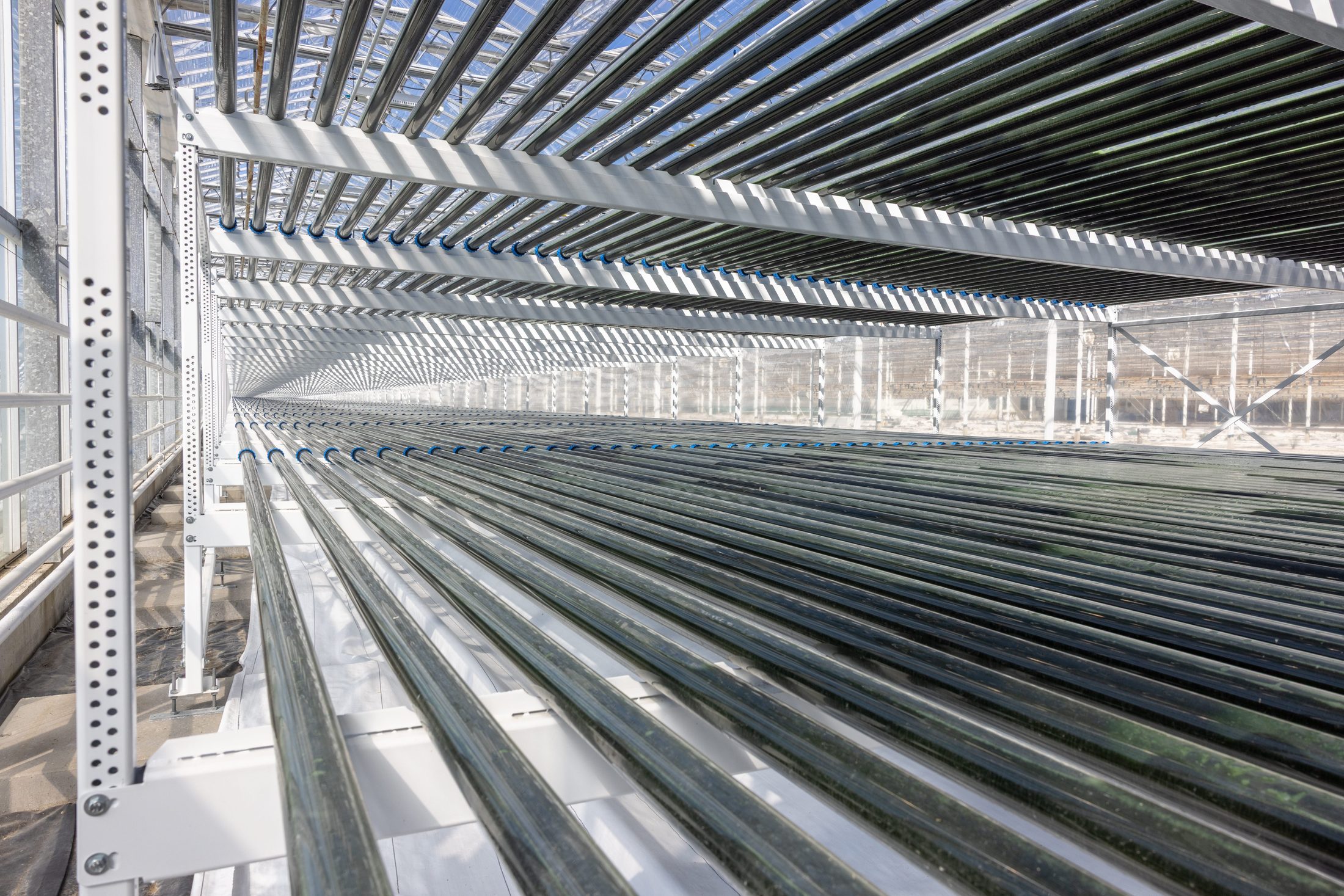
Algae by Nature is taking an important next step: building the first large-scale microalgae production facility in the Netherlands. In a new, well-insulated greenhouse of more than 10,000 m² in Bleiswijk, our small-scale cultivation is being scaled up to industrial level.
What makes this project special is that cultivation takes place in a greenhouse — making optimal use of natural sunlight for the algae's growth, rather than relying entirely on artificial lighting.
Another distinctive feature: the site is directly connected to the CO2 network (the OCAP pipeline) of the Port Industrial Complex in Rotterdam. CO2 that would otherwise be emitted is used directly as a nutrient for our algae, which convert it into high-quality raw materials such as proteins, essential fatty acids and antioxidants.
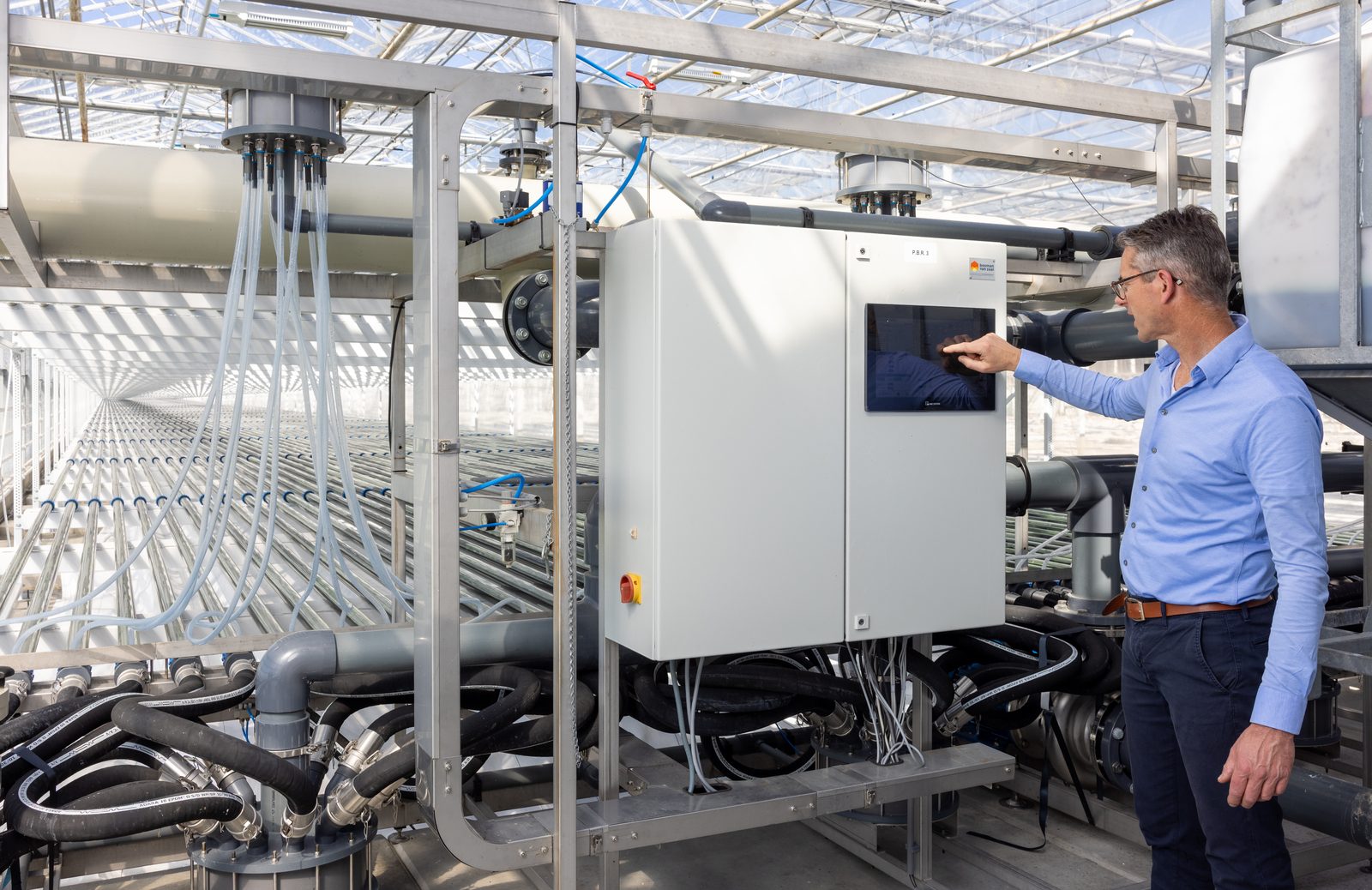
The cultivation process in five steps.
Input from the OCAP network and the cultivation system.
Closed photobioreactors convert CO2 into algae biomass.
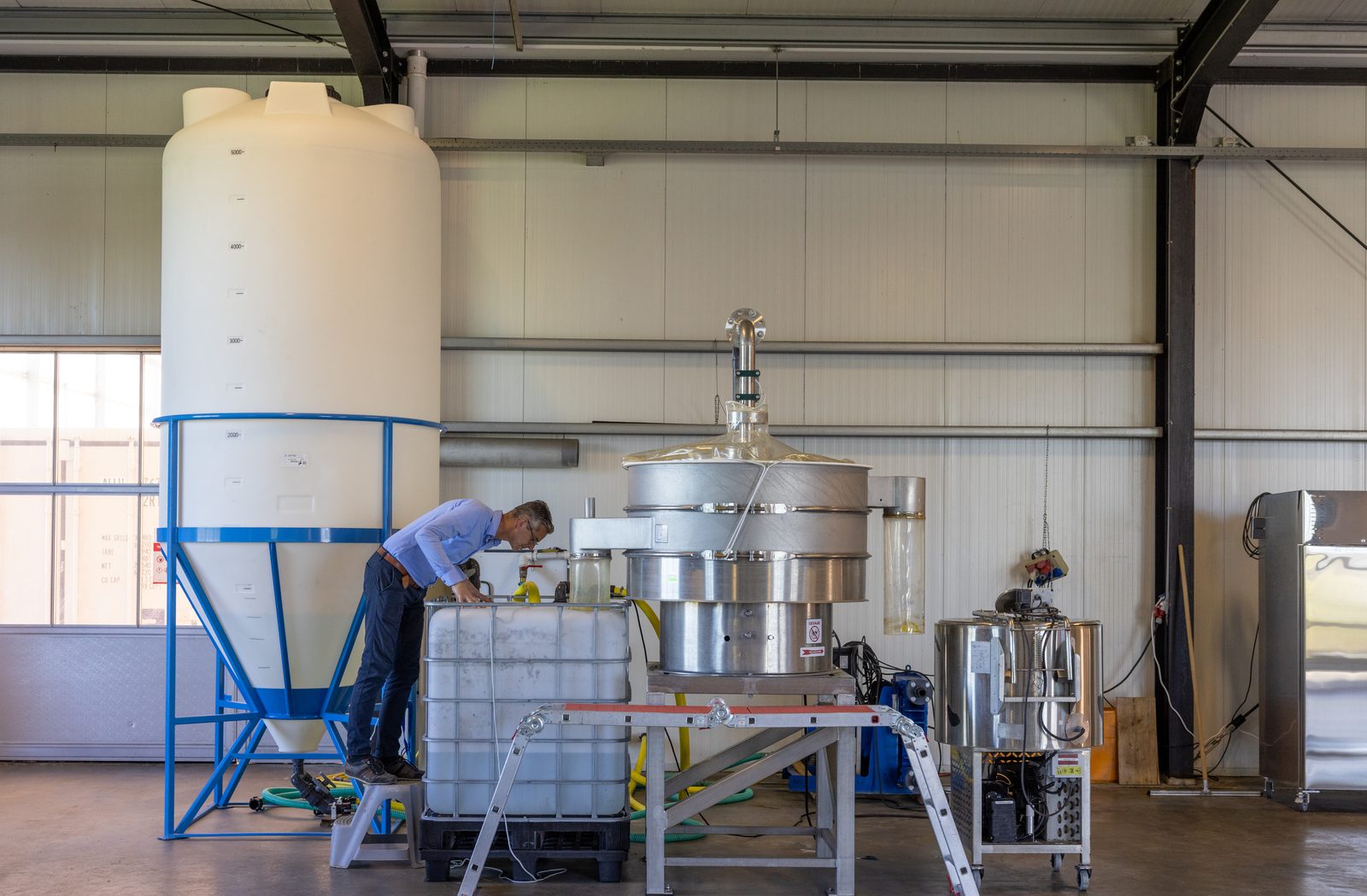
Continuous harvesting of the grown biomass.
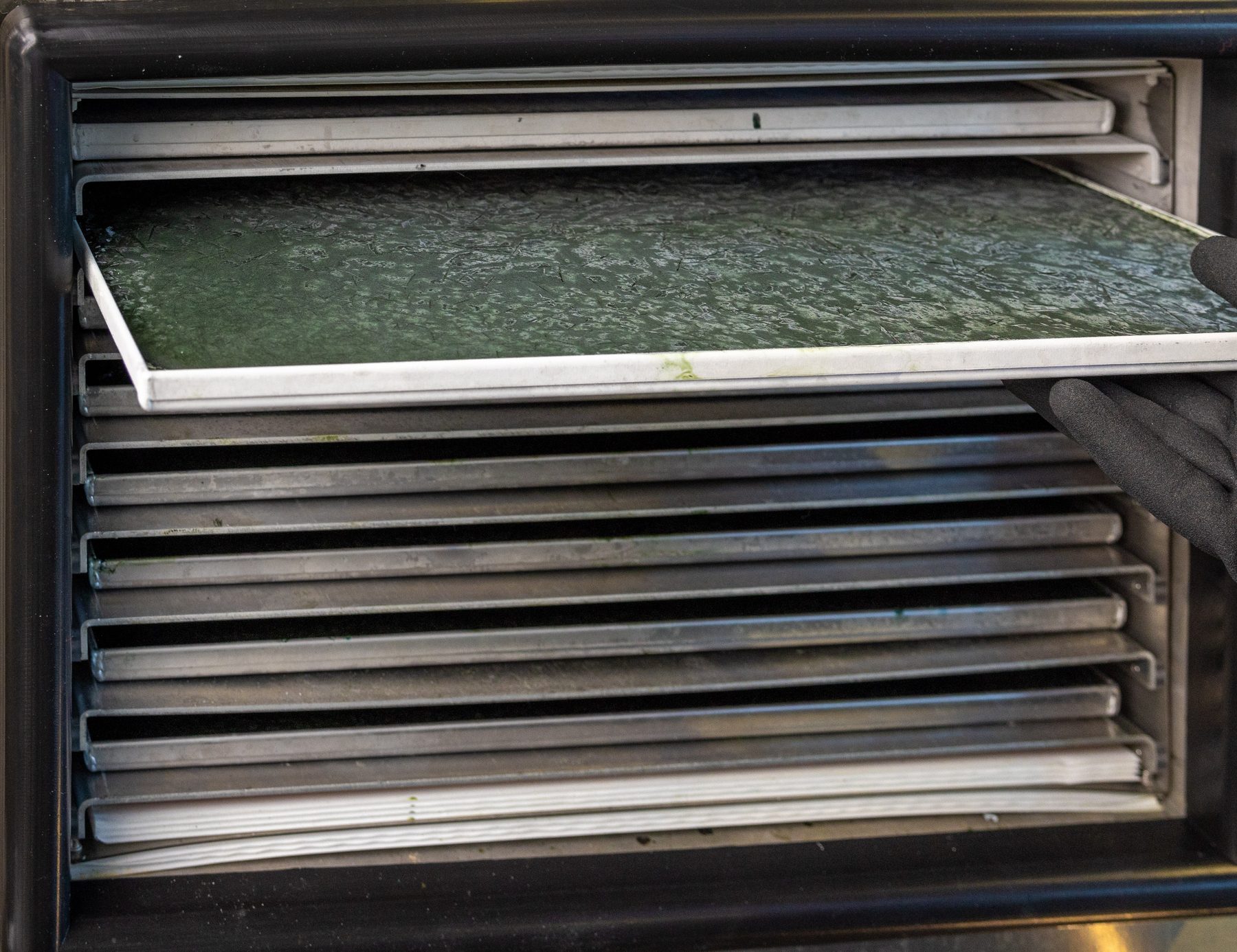
Energy-efficient drying into stable biomass.
High-quality raw material, ready for our customers.
Collaboration
The project is carried out in collaboration with two specialised partners:
Lgem (LGEMSynalgae B.V.) develops and supplies the closed cultivation systems — the photobioreactors in which our algae grow.
GEA Process Engineering Nederland B.V. brings expertise in harvesting and processing technology.
The project runs from 2024 to 2027 and is made possible in part by the Kansen voor West III subsidy scheme.

This project receives support from the Kansen voor West III programme, made possible in part by the province of Zuid-Holland and funded by the European Regional Development Fund (ERDF) of the European Union.